
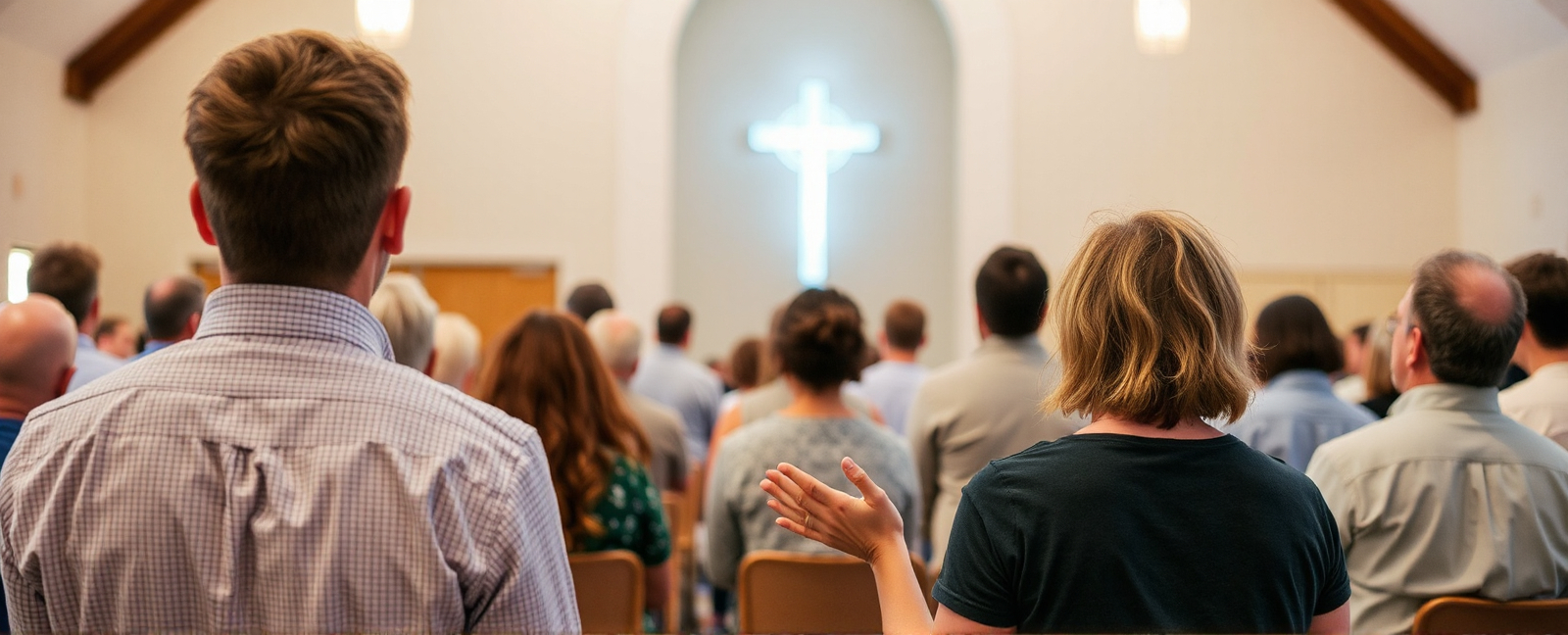
Why Worship on Sunday
"On the first day of the week we came together to break bread. Since Paul was ready to leave the next day, he talked to them and kept on speaking until midnight." (Acts 20:7)
The apostle Paul and the believers came together to break bread on the first day of the week. Some, however, argue that this was only because he was about to travel the next day. Let us then consider this passage:
"Now about the collection for the saints, you are to do as I directed the churches of Galatia: On the first day of every week, each of you should set aside a portion of his income, saving it up, so that when I come no collections will be needed." (1 Corinthians 16:1–2)
Paul wrote to the church at Corinth instructing them to set aside money on the first day of the week. The first day of the week is Sunday, and Saturday is the seventh day (the last day). Why did he instruct them to make their contributions on Sunday? Because on that day they were accustomed to assembling for worship. The English Scripture reads, "Upon the first day of the week." Therefore, it is evident that worship on Sunday began in the time of Paul and the apostles.
Concerning the Observance of Days
Concerning the observance of days, the apostle Paul wrote to the Roman believers:
"One person regards a certain day above the others, while someone else considers every day alike. Each one should be fully convinced in his own mind. He who observes a special day does so to the Lord; he who eats does so to the Lord, for he gives thanks to God; and he who abstains does so to the Lord and gives thanks to God." (Romans 14:5–6)
He also wrote to the church at Colossae:
"Therefore let no one judge you by what you eat or drink, or with regard to a feast, a New Moon, or a Sabbath. These are a shadow of the things to come, but the body that casts it belongs to Christ." (Colossians 2:16–17)
The Israelites were accustomed to observing the Sabbath, the new moons, and the feasts — the Passover, the Feast of Unleavened Bread (the feast of matzah), the Feast of Firstfruits, the Feast of Pentecost, the Feast of Trumpets, the Day of Atonement, and the Feast of Tabernacles (Sukkot — Lev. 23). Some of these feasts were fulfilled at Christ's first coming. The Passover was fulfilled when Christ was crucified. Paul says:
"For Christ, our Passover lamb, has been sacrificed." (1 Corinthians 5:7)
The passover lamb prefigured Christ, and with His death the type was fulfilled and its purpose accomplished. The Passover therefore no longer needs to be observed. The Feast of Unleavened Bread was fulfilled through Christ's burial, because leaven signifies sin (1 Corinthians 5:7). The sin of humanity (the leaven) was laid upon Christ by God, and it was through that sin that He was crucified; and when those sins were buried with Him, the feast was fulfilled. The Feast of Unleavened Bread therefore no longer needs to be observed. The Feast of Firstfruits was fulfilled when Christ rose again from the dead, for Christ is called "the firstfruits of them that slept"—the firstfruit offered to God (1 Corinthians 15:20). That feast therefore no longer needs to be observed. The Feast of Pentecost was likewise fulfilled when the Holy Spirit descended (Acts 2), and so it too no longer needs to be observed.
Three feasts remain that have not yet been fulfilled: the Feast of Trumpets, the Day of Atonement, and the Feast of Tabernacles. The Feast of Trumpets will be fulfilled when Christ takes His church away. We read that Christ will descend at the last trumpet (1 Thessalonians 4:14–17; 1 Corinthians 15:51–52). The Day of Atonement will be fulfilled at Christ's second coming. The Israelites were accustomed to observing the Day of Atonement in the seventh month (Tishrei). At His second coming, Christ will atone for and forgive the sins of all the Israelites who survive the great tribulation—something that still lies in the future. After that, they traditionally celebrate the Feast of Tabernacles (Sukkot). The Feast of Tabernacles is kept to remind people of God's unfailing protection during the forty years they wandered in the wilderness living in tents. That feast will be fulfilled when Christ rules this world for a thousand years. During the millennium, under Christ's reign, everyone will have abundant food and water; the feast symbolizes a life of safety and peace, with no enemies. That too is still in the future.
Although these feasts are not yet fulfilled, Christians do not observe them, because the Lord did not command the church to observe them. The Lord Jesus did not command any specific feast to be observed by the church or by believers. Yet the days and feasts that Christians observe now are Sunday, Christmas, New Year's Day, and Easter (Resurrection Day). Besides these, others have been added: Mother's Day, Father's Day, Valentine's Day, and days of thanksgiving. These feasts were not commanded by Christ. Christmas is celebrated for the birth of Christ, but the exact date is unknown; it is therefore commonly observed on December 25. Although people celebrate it, they do not know or speak of its meaning. It is merely a feast of eating and drinking, exchanging gifts, and merrymaking. There is no record that the apostles ever celebrated Christmas. One might therefore ask whether it should continue to be observed. It may be kept simply as a custom, and even non-Christians are familiar with it. But if it is observed, one ought at least to explain that Christ became incarnate (took on human flesh) and to proclaim the message of salvation. As it is, since it is kept merely for enjoyment and pleasure, it is of no benefit.
Concerning the New Year: since the calendar is counted from the birth of Christ, it ought to coincide with Christmas. Moreover, for those who are saved, the New Year ought to be observed as a time to resolve three things: that another year has nearly passed on the journey toward the Kingdom of Heaven; that they have experienced God's grace during the years gone by; and that they will live according to the will of God in the year ahead. The New Year, too, is not something God commanded to be observed. For those who will not be saved—who will not enter the Kingdom of Heaven but will descend into the lake of fire—the New Year is an inauspicious occasion, for another year has nearly passed toward going down into the fiery lake. But because they do not realize this, it is pitiful to see them celebrate it with great excitement and joy.
Concerning the resurrection as well, Scripture contains no command to observe it, nor any record that the apostles observed it. And when this feast is celebrated, without any mention or reflection on the benefits received through Christ's death and resurrection, it becomes merely a banquet and a party. Believers therefore need to reconsider carefully the feasts they observe. Rather than feasts of mere social enjoyment, they ought to observe those that fulfill the will of God. Therefore the apostle Paul said:
"Let no man therefore judge you in meat, or in drink, or in respect of an holyday, or of the new moon, or of the sabbath days."
To echo Romans 14:5, which we quoted above, may God grant all believers humility and discernment, that each may be fully persuaded in their own conviction and grow ever deeper in the knowledge of His will.



REF726