
With God or Without?
David became greater and greater, for the LORD God of Hosts was with him. (2 Samuel 5:10)
David became greater and greater, for the LORD of Hosts was with him. (1 Chronicles 11:9)
Why was it that Saul, though a king, grew weaker? The reason was that the Spirit of the Lord had departed from Saul, and the Lord sent an evil spirit to torment him. (1 Samuel 16:14) Why did David grow stronger? Because the Lord was with him. Thus, whether we grow weaker or stronger depends on whether the Lord is with us or not. Saul was a king, yet he grew weaker. So even though we may have position, knowledge, or wealth, we have no strength in those things. Saul did not weaken all at once. It happened day by day, year by year. And although we may not weaken all at once either, once the Lord is no longer with us, we will grow weaker little by little.
Saul Humbled
And upon whom is all the desire of Israel, if not upon you and all your father’s house?” Saul replied, “Am I not a Benjamite from the smallest tribe of Israel, and is not my clan the least of all the clans of Benjamin? So why would you say such a thing to me?” (1 Samuel 9:20-21).
When Saul was chosen as king, he humbly spoke of himself as shown above.
"So again they inquired of the LORD, “Has the man come here yet?” And the LORD replied, “Behold, he has hidden himself among the baggage.” . (1 Samuel 10:22).
Saul Did Not Listen to God
Why did God abandon Saul? Because he did not fully obey the Lord's word. Samuel told Saul:
"And you shall go before me to Gilgal, and surely I will come to you to offer burnt offerings and to sacrifice peace offerings. Wait seven days until I come to you and show you what you are to do.” (1 Samuel 10:8)
"And Saul waited seven days for the time appointed by Samuel, but Samuel did not come to Gilgal, and the troops began to desert Saul. So he said, “Bring me the burnt offering and the peace offerings.” And he offered up the burnt offering. (1 Samuel 13:8-9).
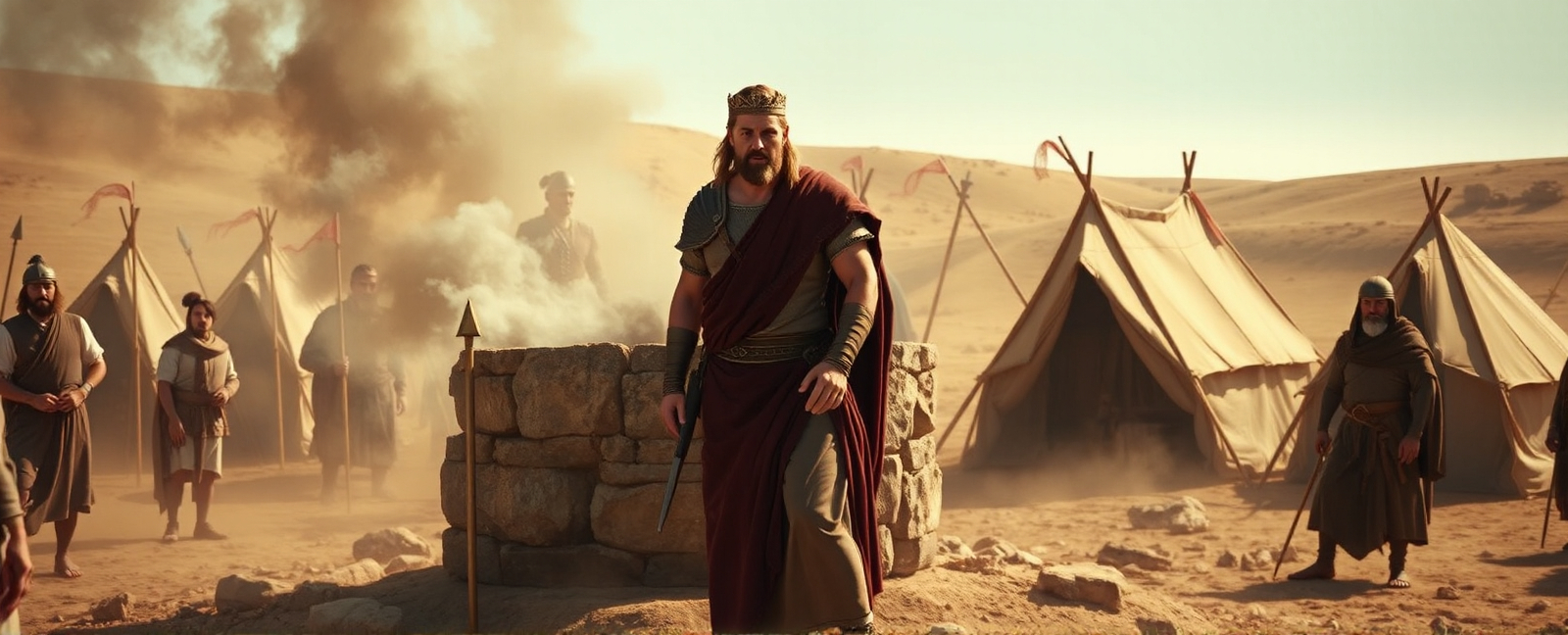
Sacrifice is easy, but only priests are allowed to offer sacrifice to God. Unable to wait for Samuel, Saul himself offered the burnt offering.
“What have you done?” Samuel asked. And Saul replied, “When I saw that the troops were deserting me, and that you did not come at the appointed time and the Philistines were gathering at Michmash, I thought, ‘Now the Philistines will descend upon me at Gilgal, and I have not sought the favor of the LORD.’ So I felt compelled to offer the burnt offering.” “You have acted foolishly,” Samuel declared. “You have not kept the command that the LORD your God gave you; if you had, the LORD would have established your kingdom over Israel for all time. But now your kingdom will not endure; the LORD has sought a man after His own heart and appointed him ruler over His people, because you have not kept the command of the LORD.” Then Samuel set out from Gilgal and went up to Gibeah in Benjamin. And Saul numbered the troops who were with him, about six hundred men.(1 Samuel 13:11-15).
As shown above, though Saul did not obey the Lord's word, God did not abandon him all at once.
"After Saul had assumed the kingship over Israel, he fought against all his enemies on every side—the Moabites, the Ammonites, the Edomites, the kings of Zobah, and the Philistines. Wherever he turned, he routed them. " (1 Samuel 14:47)
Saul Disobeyed Again
Then Samuel said to Saul, “The LORD sent me to anoint you king over His people Israel. Now therefore, listen to the words of the LORD. This is what the LORD of Hosts says: ‘I witnessed what the Amalekites did to the Israelites when they ambushed them on their way up from Egypt. Now go and attack the Amalekites and devote to destruction all that belongs to them. Do not spare them, but put to death men and women, children and infants, oxen and sheep, camels and donkeys.’” (1 Samuel 15:1-3).
"Saul and his troops spared Agag, along with the best of the sheep and cattle, the fat calves and lambs, and the best of everything else. They were unwilling to destroy them, but they devoted to destruction all that was despised and worthless." (1 Samuel 15:9).
“But I did obey the LORD,” Saul replied. “I went on the mission that the LORD gave me. I brought back Agag king of Amalek and devoted the Amalekites to destruction. The troops took sheep and cattle from the plunder, the best of the things devoted to destruction, in order to sacrifice them to the LORD your God at Gilgal.” (1 Samuel 15:20-21).
Saul dodged by claiming he took the sheep and cattle for the people, not himself. He would never dare take them without excuse. Worse still, he claimed these animals were taken to sacrifice to the Lord. Do we also shift our blame onto others? Have we ever planned to offer to God things that are not pleasing to Him?
But Samuel declared: “Does the LORD delight in burnt offerings and sacrifices as much as in obedience to His voice? Behold, obedience is better than sacrifice, and attentiveness is better than the fat of rams. For rebellion is like the sin of divination, and arrogance is like the wickedness of idolatry. Because you have rejected the word of the LORD, He has rejected you as king.” (1 Samuel 15:22-23).
Samuel said that God prefers obedience over sacrifice. Rebellion is like associating with evil spirits — a great sin. A stubborn heart is like practicing divination — a great sin.
Lesson: Am I like Saul, who at first experienced God's blessing but grew weaker through disobedience? David was a young shepherd boy, yet he knew God's will and grew stronger day by day as the Lord was with him. Am I like David, growing stronger day by day?






REF726