
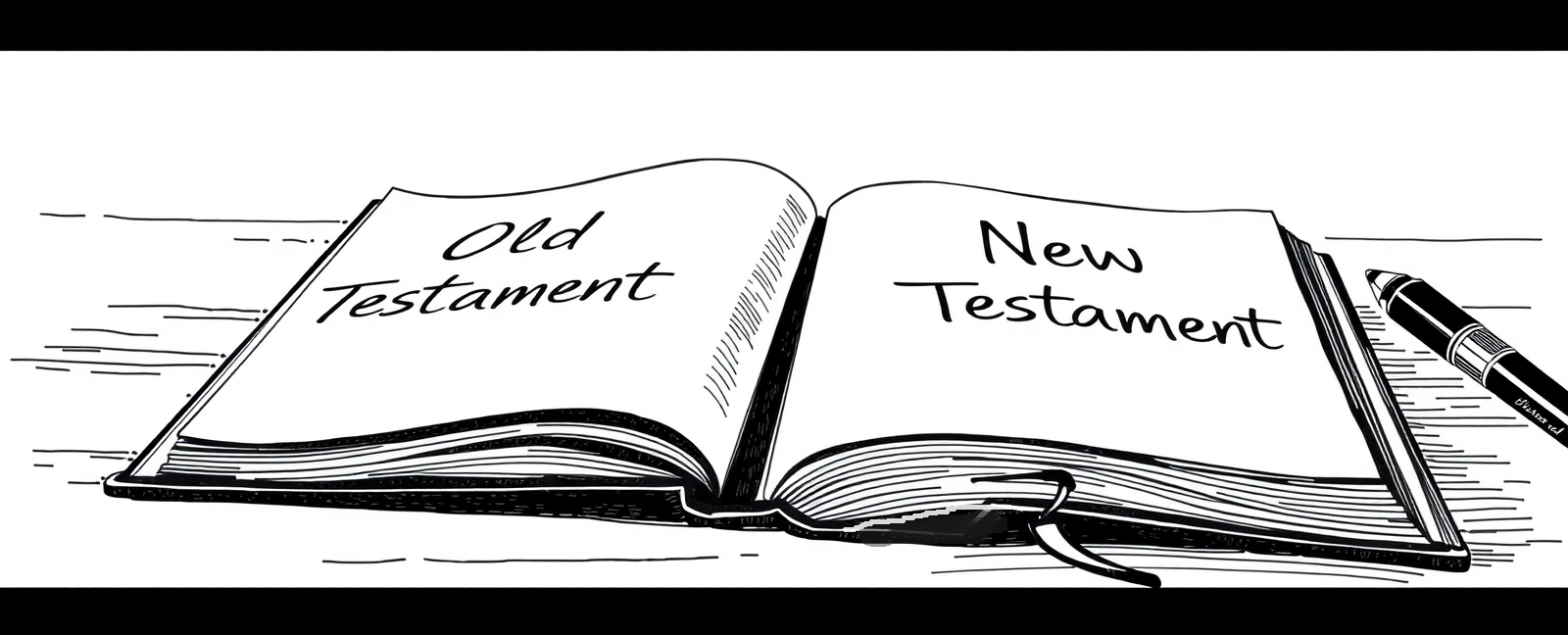
Old and New Covenants
The Old Covenant
The Bible speaks about the Old Covenant as follows: Now if you will indeed obey My voice and keep My covenant, you will be My treasured possession out of all the nations—for the whole earth is Mine. And unto Me you shall be a kingdom of priests and a holy nation.’ These are the words that you are to speak to the Israelites.” (Exodus 19:5–6)
This covenant was made by God with the Israelites at Mount Sinai. If the Israelites kept God's covenant, they would be His special treasure above all peoples—a kingdom of priests and a holy nation.
The Covenant Established by Blood
"Then the LORD said to Moses, “Come up to the LORD—you and Aaron, Nadab and Abihu, and seventy of Israel’s elders—and you are to worship at a distance. Moses alone shall approach the LORD, but the others must not come near. And the people may not go up with him.” When Moses came and told the people all the words and ordinances of the LORD, they all responded with one voice: “All the words that the LORD has spoken, we will do.” And Moses wrote down all the words of the LORD. Early the next morning he got up and built an altar at the base of the mountain, along with twelve pillars for the twelve tribes of Israel. Then he sent out some young men of Israel, and they offered burnt offerings and sacrificed young bulls as peace offerings to the LORD. Moses took half of the blood and put it in bowls, and the other half he sprinkled on the altar. Then he took the Book of the Covenant and read it to the people, who replied, “All that the LORD has spoken we will do, and we will be obedient.” So Moses took the blood, sprinkled it on the people, and said, “This is the blood of the covenant that the LORD has made with you in accordance with all these words.” (Exodus 24:1–8)
When a couple marries, the officiating pastor solemnly witnesses their marriage contract. In like manner, Moses served as the mediator who established the covenant between God and the Israelites. Moses wrote down everything that God had spoken, and this written record was called the Book of the Covenant. Before the assembled people, Moses read from this covenant document, and they all promised: "All the words that the LORD has spoken, we will do." The covenant was ratified with the blood of oxen—Moses sprinkled half the blood on the altar and half on the people, declaring that this was the blood of the covenant by which the Lord had entered into agreement with them.
A New Covenant Shall Be Given
Although the Israelites had made a covenant with God as described above, they did not obey His voice and broke their covenant. Therefore the prophet Jeremiah wrote:
"Behold, the days are coming, declares the LORD, when I will make a new covenant with the house of Israel and with the house of Judah. It will not be like the covenant I made with their fathers when I took them by the hand to lead them out of the land of Egypt— a covenant they broke, though I was a husband to them,” declares the LORD. “But this is the covenant I will make with the house of Israel after those days, declares the LORD. I will put My law in their minds and inscribe it on their hearts. And I will be their God, and they will be My people. No longer will each man teach his neighbor or his brother, saying, ‘Know the LORD,’ because they will all know Me, from the least of them to the greatest, declares the LORD. For I will forgive their iniquities and will remember their sins no more.”" (Jeremiah 31:31–34)
The Old Covenant was made between God and the Israelites. Therefore, the New Covenant would also be made only with the people of Israel—not with Gentile nations.
From what God said about this new covenant, we see four key points:
- The law will not be written on stone tablets anymore but will be placed within them, written on their hearts.
- The Lord will be their God; they shall be His people.
- There will be no need to teach each other, "Know the Lord"—from the least to the greatest, all shall know Him.
- He will forgive their iniquities and remember their sins no more.
Blood Related to the Covenant
Although the Lord Jesus Christ came to establish a New Covenant with Israel, He did not have the opportunity to do so. Nevertheless, regarding the blood that would be shed for this New Covenant, He said: "While they were eating, Jesus took bread, spoke a blessing and broke it, and gave it to the disciples, saying, “Take and eat; this is My body.” Then He took the cup, gave thanks, and gave it to them, saying, “Drink from it, all of you.This is My blood of the covenant, which is poured out for many for the forgiveness of sins.'" (Matthew 26:26–28)
Thus we understand that when Jesus died on the cross, His shed blood was for the New Covenant. Although Israel did not carry out the New Covenant because they misunderstood and killed their Messiah, nevertheless the blood associated with the covenant had already been shed.
Connection to the New Covenant
Therefore, believers also participate in the communion feast (the Lord's Supper). When administering the cup near the end of communion, pastors often say: "This is My blood of the covenant, which is poured out for many for the forgiveness of sins." (Matthew 26:28); or “This cup is the new covenant in My blood; do this, as often as you drink it, in remembrance of Me.” (1 Corinthians 11:25). Are you someone connected to the New Covenant? If not, partaking in communion holds no meaning whatsoever.
Members of a Priestly People
The Israelites were allowed to become members of priests only when they obeyed God's word. But for those who believe in Jesus, Peter wrote: "But you are a chosen people, a royal priesthood, a holy nation, a people for God’s own possession, to proclaim the virtues of Him who called you out of darkness into His marvelous light." (1 Peter 2:9)
Therefore, I wish to point out that if you receive Lord Jesus, you yourself become a member of this priestly people — each believer is personally a priest. Although believers cannot themselves make a covenant with God nor can we perfectly obey His word, because our Lord Jesus obeyed on our behalf, we enjoy the benefits of the New Covenant. Under this new covenant, true believers are: a chosen race, members of priests, a holy nation, a special possession—God's own treasure. Everyone should recognize their own worth and take care accordingly. Believers, being God's treasured possessions, receive His watchcare and concern. As members of priests, we enjoy God's blessings. How great is our grace!
At the Second Coming
Believers already enjoy the benefits of the New Covenant; however, for Israel, the originally given promises will not be fulfilled until Christ's Second Coming:
"And so all Israel will be saved, as it is written: “The Deliverer will come from Zion; He will remove godlessness from Jacob.And this is My covenant with them when I take away their sins.” (Romans 11:26–27)
Summary: Throughout history, God has made covenants with His people—the Old Covenant at Sinai was ratified with blood (Exodus 24:1–8). But Israel broke it. Jeremiah prophesied a New Covenant written on hearts, not stone tablets (Jeremiah 31:31–34). Jesus fulfilled this through His shed blood at the cross: "This cup is the new covenant in My blood" (Matthew 26:28). All who receive Christ become members of priests—chosen by God, a holy nation, His own treasure (1 Peter 2:9). We enjoy these blessings because Jesus obeyed on our behalf. Believers now experience the New Covenant's benefits, while Israel awaits its full fulfillment at Christ's Second Coming (Romans 11:26–27).





REF726