
Let Us Build the Temple
The Jews Commanded to Build a Temple
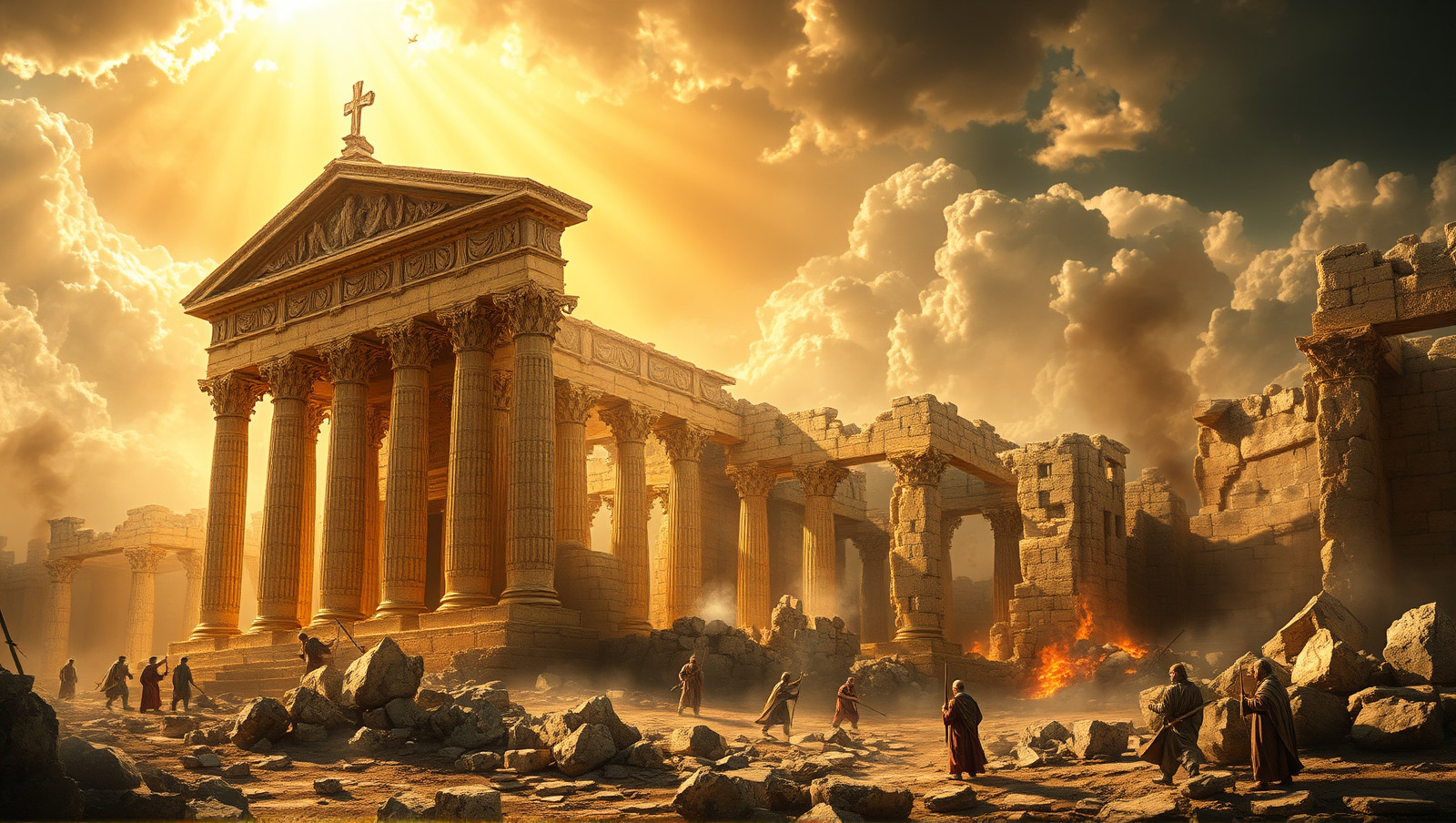
God commanded Moses around 1500 BC to build the tabernacle. Then, around 960 BC, Solomon built the Temple in place of that tabernacle. However, God allowed the Babylonians to destroy this temple in 586 BC because the people had abandoned the Everlasting God and worshipped idols instead. God warned Jeremiah about the destruction of the temple, yet the people did not believe him. They relied on God's words through Solomon: "I have consecrated this temple, which you have built, by putting my Name there forever. My eyes and my heart will always be there." (1 Kings 9:3). Consequently, they believed God would never allow His temple to be destroyed, often declaring, "This is the temple of the Lord, the temple of the Lord, the temple of the Lord!" (Jeremiah 7:4–5). By saying this, they meant that God would protect the temple from enemy destruction. Nevertheless, the Babylonians were permitted to destroy it.
God commanded King Cyrus of Persia (Cyrus the Great) in 538 BC to rebuild the temple (Ezra 1:1–4). King Cyrus then ordered Zerubbabel, a descendant of Sheshbazzar, to oversee its construction. Although the foundation was laid, work halted for seventeen years due to opposition and discouragement. Later, encouraged by the prophets Haggai and Zechariah, construction resumed during the reign of Darius I and was completed in 516 BC.
During the era of Solomon's Temple, King Solomon possessed great power, wealth, and a substantial workforce. However, in rebuilding the Second Temple, they lacked political independence, resources, and authority. Therefore, building the temple during Ezra's time was a formidable challenge, comparable to dealing with a mighty mountain. Consequently, God said through the angel of the Lord: "This is the word of the Lord to Zerubbabel: ‘Not by might nor by power, but by my Spirit,’ says the Lord Almighty. “What are you, mighty mountain? Before Zerubbabel you will become level ground. Then he will bring out the capstone to shouts of ‘God bless it! God bless it!’”(Zechariah 4:6–7). Although God commanded Ezra to build it, the work would be accomplished through His Spirit.
While the Second Temple was not as grand or magnificent as the First, divine intervention ensured its foundation was laid in 538 BC. As stated, construction was halted in 536 BC and resumed after a 17-year pause; work then continued for four years. Thus, this immense task was successfully completed over a total period of six years: two years before the halt and four years after resumption.
Building the Temple of God Today
Today, God commands every believer to build temples for Him. These temples are not made of wood or stone like the previous ones, but they are formed by the human body becoming a temple of God (1 Corinthians 6:19-20). The Lord Jesus said, “When I come again, and my holy Spirit dwells upon you, you will receive power, and you shall be my witnesses in Jerusalem, in all Judea, and to the ends of the earth” (Acts 1:8). This means that God gives the Holy Spirit so that we may bear witness. The Holy Spirit is power. Although there are many benefits from receiving the Holy Spirit, the primary purpose is for witnessing. However, instead of sharing the good news of Jesus' salvation with those who have not yet heard it, believers often fellowship only among themselves.
Although God commanded the Jewish people to rebuild His temple, they delayed due to opposition. Instead of constructing God's house, they focused on building their own homes. Because of this, the Lord spoke through the prophet Haggai, saying: These people say, ‘The time has not yet come to rebuild the Lord’s house.’” Then the word of the Lord came through the prophet Haggai: “Is it a time for you yourselves to be living in your paneled houses, while this house remains a ruin?” Now this is what the Lord Almighty says: “Give careful thought to your ways. You have planted much, but harvested little. You eat, but never have enough. You drink, but never have your fill. You put on clothes, but are not warm. You earn wages, only to put them in a purse with holes in it. (Haggai 1:2-6)
Today, those who have been saved have also been given the task of building the temple, yet they use various excuses to avoid it. Like the Jews of those days, believers today are rejecting the call by saying it is too early, that there is no time for them, or that they lack gifts. While the Jews were building their private two-story houses, God's house was in ruins; similarly, believers are spending time and money on their own homes and desired things instead of building the temple of God. Just as God afflicted the Jews by making their harvests sparse, so too He afflicts us with problems. They ate but remained unsatisfied; likewise, we struggle to eat or drink. Even though we earn, because we store our resources in houses that lack security, we are unable to have enough. As God said, let us consider carefully what we have been doing.
Zerubbabel listened to God's word and completed the temple within six years. If we listen to God's words, we can build many temples for Him. Just as Zerubbabel and the Jews rebuilt the temple by listening to God's word, let us also build spiritual temples. By listening to God's word, we will receive even greater blessings than before. When we reach heaven, not only will we be praised as "Well done, good and faithful servant!" but we shall also be rewarded abundantly. Let us devote ourselves to saving souls that last forever rather than pursuing worldly materials that last but a brief moment.





REF726